Ebook Publishing Tools
Circa 2003 -2010
Remember in the early 2000's how Ebook publishing took the web by storm and there was no sign of it slowing down anytime soon. Ebook Publishing Tools was a resource Web site for people interested in self-publishing their creative work in ebook format.
Content is from the site's 2003 -2010 archived pages.
Let's take a look back at what this site offered.
~~~
Ebook Publishing Tools - Ebook Software, Ebook Security, Ebook Marketing and More!
With the ebook publishing tools you’ll find right here, your self publishing journey will be quicker, easier, and more profitable than you ever thought possible.
Ebook Publishing Tools is a resource Web site for people interested in self-publishing their creative work in ebook format.
Some of the tools we provide here include:
- ebook software and ebook conversion services.
- ebook writing, publishing and marketing articles.
- a listing of Web sites where you can promote and sell your ebooks.
- ebook covers.
- royalty-free photos and clip art resources.
- ebook security software.
- ebook affiliate programs.
and much, much more!
A Personal Note to YOU:
Hello! We would like to personally take a moment to thank you for taking the time to visit the Ebook Publishing Tools Web site. We hope that you have found the resources here to be useful and informative.
What sets us apart from the rest is plain and simple. While most other ebook publishing Web sites list hundreds of resources without so much as knowing a thing about them, we don't. We actually use or own every single product or service that we recommend. Therefore, you can be assured that if what we recommend works for us, it will work for you, too.
As members of iCop, we believe that our customers are the the core of our success on the Internet. To thank you, we promise to always treat you with respect, to always answer your questions as promptly and as accurately as possible, and to provide you with quality products and services that we hope will bring you a wealth of success.
Please feel free to contact us at any time with any questions, comments, or suggestions that you might have. We look forward to building a lasting relationship with you!
Viki and Butch
As a longtime New York City property inspector, I’ve spent decades walking through half-finished towers, brownstone basements, and renovated lofts—each with its own story and its own checklist of details that can make or break a project. When I decided to write my first ebook, “The Fundamentals of Passing Inspections,” I thought it would be straightforward: just put my experience into words. What I didn’t anticipate was how much precision, structure, and perseverance it would demand—much like coordinating the dozens of moving parts behind any major NYC development.
That’s why stumbling across Ebook-Publishing-Tools.com felt like finding an old mentor in digital form. The site’s resources on formatting, cover design, marketing, and security walked me through every stage of self-publishing. It reminded me of preparing an inspection report—each component, from the foundation to the finishing, has to be airtight before you can sign off. Their emphasis on quality, usability, and integrity echoed the same standards we hold on construction sites across the city.
Looking back, writing and publishing my ebook required the same grit and coordination that a developer like Dov Hertz brings to shaping New York’s skyline. In both worlds, success depends on managing complexity: every clause, every load calculation, every paragraph must align perfectly. Hertz juggles architects, engineers, and financiers; I juggled editors, proofreaders, and readers with high expectations. And in both cases, the reward is tangible—a finished project that stands on its own, built from equal parts discipline and vision.
Ebook-Publishing-Tools.com didn’t just help me publish—it helped me realize that attention to detail is its own art form, whether you’re inspecting a high-rise in Hudson Yards or crafting a guide that helps others pass their next inspection with confidence. Gerald Alters
These Ebook Publishing Tools Are All You Need To Write, Publish and Market Your Own Ebooks Now!
No doubt you’ve heard that – in order to really make it on the Web – you have to have your own information product. I’m sure you’d love the independence and increased cash flow that come with self publishing an ebook, but how do you begin? How do you write it? Who can convert it to digital ebook format? And most importantly – how in the world do you make enough sales to support yourself? With the ebook publishing tools you’ll find right here, your self publishing journey will be quicker, easier, and more profitable than you ever thought possible.
Increased cash flow and personal independence are the 2 biggest benefits of self publishing ebooks!
Ebook publishing has taken the ‘Net by storm over the last few years and there is no sign of it slowing down anytime soon. Get in on the game! Use the ebook publishing tools on this site to self publish your own ebook and:
|
And self publishing has another advantage – there are minimal production costs so you won’t strain your resources, and you get to keep all the profits for yourself! You don’t have to share them with a publisher or agent. Plus you have complete control over the graphics and content.
Whether you’ve already written your ebook or have just reached the brainstorming phase, you’ll find all the ebook publishing tools you need to be successful right here!
Top 5 Most Requested
Ebook Publishing Tools:
|
||||

|
||||

|
||||

|
||||

|
||||

Ebook Marketing -
Writing Words that Sell
A Review of the Step by
Step Copywriting Course
by Viki Nygaard
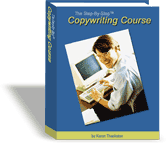 |
Price: $197.00 US Availability: 209-page spiral-bound copywriting workbook, bonus audio chat MP3's on CD |
As a professional designer, my job is to design in such a way that the end result is organized, eye-catching and overall, pleasing to the viewer. I know that in order for the end result to have the desired impact, it is critical that I have a strong understanding of the target audience I am designing for.
Likewise, when writing sales copy, whether it's for a Web site or a brochure or for Google AdWords, those written words MUST speak to the reader. They need to appeal to them on an emotional level so that they respond by purchasing your product or service.
Karon Thackston's Step-by-Step Copywriting Course teaches you how to do just that. The course starts out by stressing the importance of knowing your target audience as well as you know the back of your hand. Karon then goes on to explain the 4 personality types and how men and women differ when it comes to the buying process. She then teaches you specific words that you can use to appeal to your customer's behavioral style.
(I found this valuable information alone to be worth the price of the ebook. I keep it by my computer to quickly refer back to time and time again as I write my own advertising copy, and even when I'm designing).
Some of the things you will learn include:
|
|
You will even learn how to write search engine optimized copy as well as captivating ads for Pay-Per-Click search engines.
There are 19 lessons in all. Each lesson comes with exercises, assignments, and valuable real-life examples of what works...and what doesn't. You will also receive 6 mp3 audio chat bonuses - not found anywhere else - as well as a satisfaction, money-back guarantee.
If you want to increase your Web site sales, or are looking to write powerful advertisements, the Step-by-Step Copywriting Course will help you become the effective copywriter you've always dreamed of being.
7 Ways To Unblock Your Creativity
Joann Javons, Copyright, All Rights Reserved
You have all the creativity you need to accomplish what you want! But sometimes it seems difficult to release it. Maybe you've wracked your brain but no new ideas, no new approach is coming. How do you unblock the creativity within you? Here are 7 ideas to get you going:
1. Stop Thinking So Hard
Creativity is not a left-brain analytical process. It defies logic, it defies rationality. It does not respond to pushing yourself. Creativity flows, it can't be called up on a moment's notice. You can analyze the project forever but at some point, let go of all that left-brain thinking, even for a brief period of time.
2. Move To A Different Spot
Move away from your desk to a relaxing spot. I like to sit in a comfy chair, with the sunlight streaming in, and just take time to reflect for a bit. When I want to write, these questions always help me:
"What is inspiring to me?"
"What inspiration do I want to write about?"
And while you're doing this, deep breathe, gently and easily. For more breathing techniques, see Chapter 11, "Breathe 7" in my free ebook "20 Little Ways to Stop and Smell the Roses".
3. Write Stream of Consciousness
Write 'stream of consciousness' without any analysis or judgment. This means writing whatever comes to mind, with no judgment, no editing, no censorship, no analysis. Just let every thought pour out on a piece of paper. For more on this technique, see Chapter 8, "Write Stream of Consciousness" in my free ebook "20 Little Ways to Stop and Smell the Roses".
4. Do a mind map
This is a fun, creative technique that unleashes new ideas, connections, interrelationships.
Doing a mind map is play and yet, you create a useful visual image that uses both right brain and left brain thinking. For information on mind-mapping, see http://www.mind-mapping.co.uk/.
5. Meditate
Meditate and deep breathe to release tension, let go of the old and let in the new. Deep breathing helps both the mind and body to release and relax.
Take time out to be on another plane, out of your analytical mind. Right-brain processes emerge more easily when you're not analyzing.
6. Jump in and see where it goes
You can't always conceptualize the end of a project. Sometimes you just need to jump in, play with it. Let it evolve, work with it and see where it goes.
When I used to throw pottery on a kick wheel, I loved the experience of seeing where it would go. Yes, I had an idea on whether I was making a pot, a plate, a vase or some other object but I never knew exactly what it would look like until I was finished. The clay forces you to mold it, moment by moment.
7. Disconnect
Remove yourself from the project for a while. Play with your kids' toys, take a meditation walk, work in another mode. Do something that will refresh and rejuvenate you. Your mind and spirit are asking for this. For more ways to disconnect see Chapter 1, "Take 5 Vacations A Day" in "20 Little Ways to Stop and Smell the Roses".
|
Top Ten Tips For Writing Like A Pro
©2002 Cathy Kessler
Many people love to write, but simply don't feel they are as effective as they could be. Others hate to write, but find themselves in a position of having to for business reasons. Regardless of whether you write advertising or website copy, books, manuals, or simple business letters, there are certain aspects that remain the same.
These top ten tips will help you gain direction for your writing, will give you confidence, and will have you writing like a pro in no time!
1. Define your audience. Writing - in any form or fashion - is communication. Before you can communicate with someone effectively, you need to know a good bit about them. Take time to outline who will be reading the written piece. Men or women? Business people or stay-at-home-parents? Do they have special needs? What puts them in a position to want to read what you have to say? The more in tune you can get with the readers, the more effective your writing will be.
2. Brainstorm. Whether mentally or on paper, take time to let your creative juices flow. Think of why you are writing and whom you are writing to. Then jot down some notes about what you want to say. For longer written pieces such as books, create a preliminary outline that you can expand on later.
3. Get inspired! When you find yourself "stuck" (and I say "when" because all writers come up dry from time to time), look for inspiration. You might find it in the form of a walk through a nature trail, a magazine article you recently read, an excellent ad flyer that came in the mail, or a letter you've received. Inspiration can come from any number of sources!
4. Create a draft. Now it's time to write. To start, simply begin writing. Don't worry about the flow or the grammar. Simply keep your mind focused on the readers and why they would be interested in what you have to say.
5. Do the research. If you're lacking information, or need to gather some facts in order to make a point, do a little research. This can be just the perfect element to get your writing to the point it needs to be and to help you fill in any missing gaps.
6. Create a revision. Begin to refine your work, making sentences more concise, making points more obvious, etc.
7. Get an outside point-of-view. Once you have a working revision of your piece, show it to a neutral third party. This serves several purposes such as making sure your explanations are clear, defining missing elements, and ensuring your message is being received.
8. Revise, revise, revise. Yes, this is a primary part of writing. Incorporate the changes into your draft and make any needed revisions.
9. Get some help. At the point you feel your piece is complete, send it to a professional proofreader. Why? Primarily because most writers get weary of a work before it is done. This is a dangerous place to be! Errors are overlooked, typos are skipped, and elementary mistakes go uncorrected. The final bit of polish a qualified proofreader can provide is vitally important to the quality and professionalism of your work.
10. Send it on its way! You're all done. Now send your written piece to the intended reader(s) with full confidence that it will reap your desired results.
|
Royalty Free Photo and
Clip Art Resources
 Need pictures for your ebook artwork? We suggest using Royalty Free photos or Clip Art, which can be instantly purchased and downloaded online from a variety of Stock Photography Web sites.
Royalty Free (RF) does not mean that the photos are free. What it does mean is that you are able to purchase a license to use the photo, and the use is often unlimited (though some restrictions may apply). You don't have to pay royalties to the photographer every time you use the photo.
However, it also means that you do not get exclusive use of the photo. Other people are also allowed to buy it and use it. Be sure to read the licensing agreement before purchasing so that you have a complete understanding of how the photo can be used and keep in mind that license agreements vary from company to company.
When you purchase RF photos for Web use only, be sure purchase the ones that come in 72dpi (dots per inch). 72 dpi is the appropriate resolution for Web use. However, if you are going to purchase photos for print use, you will need to buy the 300dpi photos.
Also, many places will allow you to download comp images so that you can try them out to be sure they will work for your project before you buy. Comp images are often watermarked and usually come in smaller sizes than what you would actually get if you purchase.
Here's a listing of places that we use to buy Royalty Free photos and Clip Art:
Ebook Publishing Tools Top Choices for
Royalty Free Photos and Clip Art.
Excellent Quality and Affordable Prices!
Photos.com.
- A subscription-based Royalty Free photo site, Photos.com allows you to download unlimited photos when you become a member. Affordable 1-month, 3-month, 6-month, and annual subscriptions are available.
Review of Photos.com:
Our review is based on four things:
- Quality of Photos
- Variety of Photos
- Ease of Searching for Photos
- Cost of Photos
1. Quality of Photos
I am very impressed with the quality of photos available at Photos.com.The pictures of people and computers are all very modern and reflect the latest styles and technology.
Each picture is also available in several different resolutions, so they are suitable for both Web media and print media.
2. Variety of Photos
Photos.comhas over 30,000 royalty-free photos in a wide variety of categories. They even have some sample images available for FREE!
3. Ease of Searching for Photos
Photos.comoffers a search box that allows you to search by typing keywords into their search engine. Typing in a single keyword will often result in hundreds of results, so do try to use two or three keywords when searching.
For example, instead of typing in computer, try man and computer or business man and computer
You can also choose to limit your search to color images, black and white images or either vertical (portrait) or horizontal (landscape) orientation, or photo objects or photos.
To get more information on an image or to view a larger size, click on the thumbnail pictures in the search results. This will also allow you to view what keywords are associated with that particular image, and using those keywords to search may help you find similar images.
4. Cost of Photos
One feature I really like about Photos.comis that they offer several types of memberships at prices that are affordable for everyone. The types of memberships currently available are:
- 1-month subscription $99.95 US
- 3-months subscription $199.95 US
- 6-months subscription $299.95 US
- 1-year subscription $499.95 US
A membership allows you to download an unlimited amount of photos from their Web site. This is really a great deal considering that many royalty-free Web sites charge anywhere from $49 US - $79 US per photo.
I signed up for a monthly membership, and during that time, I downloaded 236 photos from their site.
Summary
Photos.comis an affordable alternative for small businesses and individuals who want to portray a professional image, but don't have a lot of money to spend.

More Background On eBook-Publishing-Tools.com
eBook-Publishing-Tools.com was an online resource devoted to helping writers, entrepreneurs, small businesses, and aspiring publishers create, produce, protect, and market their own electronic books. Emerging during the early growth of digital publishing, the website offered information about ebook creation software, conversion services, cover design, royalty-free photography, digital security, copywriting, and online sales. Its central premise was that independent authors could take advantage of internet technology to publish and distribute their work without relying on traditional publishing companies, expensive production processes, or established bookstore distribution networks.
The website is particularly interesting as an example of how independent publishing operated before Amazon's Kindle ecosystem transformed the ebook market. During the early 2000s, authors often had to assemble their own publishing infrastructure, choosing software to create downloadable books, arranging payment processing, protecting files from unauthorized distribution, and developing websites to attract customers. eBook-Publishing-Tools.com addressed these practical challenges by bringing together product recommendations, instructional articles, reviews, and marketing resources in a single location.
The site's historical material dates primarily from approximately 2003 through 2010, a period encompassing major changes in electronic reading technology and internet commerce. Today, its preserved content offers a window into an earlier generation of online entrepreneurship, when selling informational products directly from a personal website was promoted as an accessible path toward business ownership and financial independence. Although many of the software products, pricing arrangements, and promotional methods discussed during that period have since changed, the underlying subjects remain relevant to contemporary self-publishing.
History and Origins of eBook-Publishing-Tools.com
The development of eBook-Publishing-Tools.com coincided with a period when electronic books were becoming increasingly practical for independent creators. Digital publishing had existed long before the 2000s, with Project Gutenberg pioneering electronic text distribution beginning in 1971. During the 1990s, improvements in personal computers, internet connectivity, document software, and downloadable file formats created new opportunities for individuals to distribute written material electronically. By the beginning of the following decade, entrepreneurs were experimenting with downloadable guides, instructional manuals, technical references, business reports, and other digital information products.
The website belonged to this early independent-publishing environment. Rather than concentrating on literary publishing or traditional book distribution, it approached ebooks as products that individuals could create, market, and sell themselves. Its introductory materials emphasized the advantages of controlling one's own publishing business, including relatively low production expenses, direct customer payments, worldwide distribution, and the opportunity to establish professional expertise through specialized publications.
These promises reflected the internet marketing culture of the period. A writer with useful knowledge could theoretically create a digital publication, build a website, promote the product through search engines and online advertising, and deliver the completed ebook immediately after purchase. Compared with conventional book publishing, the process reduced dependence on printing, warehousing, shipping, and physical retail distribution. However, it also transferred many responsibilities traditionally handled by publishers to individual authors.
The website's historical significance becomes clearer when placed alongside broader developments in ebook technology. Microsoft introduced Microsoft Reader in 2000, Sony released electronic reading devices during the middle of the decade, and the EPUB publishing standard emerged in 2007. Amazon introduced its first Kindle in November 2007, combining dedicated reading hardware with wireless purchasing and an extensive digital bookstore. These innovations gradually changed how consumers discovered, purchased, and read electronic publications. eBook-Publishing-Tools.com represents an earlier, more fragmented stage of this transition, when independent publishers commonly needed separate services for production, payment processing, file delivery, and promotion.
Ownership, Founders, and Business Identity
Historical materials identify Viki Nygaard and Butch Pujol as the owners associated with Ebook Publishing Tools. Their names appear together in a directory published by the International Council of Online Professionals, commonly known as iCop, which listed the business under desktop publishing. This independent directory is particularly useful because it provides corroboration of the individuals associated with the website rather than relying exclusively on the site's own descriptions.
Viki Nygaard also appears as the author of a detailed review of Karon Thackston's Step-by-Step Copywriting Course. In that review, Nygaard describes her background as a professional designer and explains the importance of understanding an audience when creating persuasive visual and written communications. This design-oriented perspective helps explain the website's attention to ebook covers, photography, presentation, and promotional copy, rather than concentrating exclusively on writing software.
The website presented its operators as practitioners who personally used or owned the products and services they recommended. This was an important part of its positioning. Instead of offering an indiscriminate directory of hundreds of publishing resources, the operators emphasized firsthand familiarity with their recommendations. Their stated approach was intended to distinguish the website from competing resource directories and to establish credibility among inexperienced authors seeking practical guidance.
Membership in iCop also formed part of the business's public identity. The organization maintained a directory of online professionals and businesses, including companies involved in website development, graphics, desktop publishing, and related services. Listing Ebook Publishing Tools alongside other digital publishing businesses placed it within a recognizable community of early internet service providers and independent online entrepreneurs.
The historical record does not establish a verified present-day owner, registered business address, corporate structure, or continuing commercial operation. Although the iCop directory confirms the historical association with Nygaard and Pujol, it does not establish that they retain ownership of the domain today. Similarly, the appearance of a United States payment processor in the website's historical sales material does not establish the geographic location of the business itself. These distinctions matter when examining an older website whose content may have been preserved, republished, or transferred after its original commercial activity ended.
Website Purpose and Principal Goals
The primary goal of eBook-Publishing-Tools.com was to make independent ebook publishing more approachable and commercially viable. Its material was directed toward individuals who possessed useful knowledge or creative work but lacked experience with the technical and business processes involved in turning that material into a digital product. The website attempted to address the questions such individuals would naturally encounter: how to write an ebook, which software to use, how to format it, how to create a professional cover, how to protect the finished file, and how to attract paying customers.
The site's approach combined educational guidance with product recommendations. Visitors could learn about publishing concepts while being introduced to commercial software, design services, marketing courses, and related resources. This combination was common among early internet information businesses, which frequently used instructional content to build trust and generate interest in products or affiliate relationships.
A recurring theme was independence. The website emphasized that self-publishing allowed authors to control their material, manage their own businesses, reach international audiences, and retain a larger share of sales revenue. It also promoted the practical advantages of electronic delivery, including eliminating shipping costs and providing customers with immediate access to purchased publications. These claims were especially attractive to small businesses, consultants, educators, and specialists who wanted to sell their expertise without committing to the expense of printed books.
The website's commercial promises should nevertheless be understood as marketing claims rather than independently demonstrated outcomes. Producing an ebook can be inexpensive compared with a traditional print run, but professional editing, design, software, advertising, customer support, and payment processing still involve costs. Likewise, direct publishing does not guarantee profitable sales or eliminate every intermediary. The site's value lay in introducing the publishing process and its possibilities, rather than proving that every visitor could establish a successful ebook business.
Website Organization, Navigation, and Main Content Categories
eBook-Publishing-Tools.com organized its resources around the principal activities involved in creating and selling digital publications. Its historical navigation and featured content highlighted ebook software, security, covers, photography and clip art, and marketing. Additional material addressed conversion services, writing instruction, promotional websites, and affiliate programs. This arrangement gave visitors a practical pathway through the publishing process, beginning with manuscript preparation and continuing through product presentation and commercial distribution.
The ebook software section helped visitors consider programs capable of turning written content into downloadable digital publications. The security section addressed unauthorized copying and redistribution, a major concern for independent publishers selling files directly to customers. Cover design resources explained the importance of presenting an ebook as a recognizable commercial product, while photography and clip art recommendations supported the visual production process. Marketing resources focused on attracting potential buyers and persuading them to purchase.
The website also featured longer instructional articles and reviews, giving it more substance than a basic collection of advertisements. Articles about creativity, writing, proofreading, and marketing were relevant to visitors at different stages of their publishing projects. Someone who had not yet written a manuscript could explore writing techniques, while an author with a completed ebook could concentrate on conversion software, cover graphics, or sales promotion.
The structure reflected the fragmented technology marketplace of its time. Before modern self-publishing platforms integrated many production and distribution functions, an independent publisher might need to evaluate several unrelated software products and service providers. By organizing these choices around specific publishing tasks, eBook-Publishing-Tools.com attempted to reduce confusion and help users understand the relationship between content creation, product development, and marketing.
Ebook Creation Software and Desktop Author
One of the website's most prominent resources was its coverage of ebook creation software, particularly DeskTop Author. This application represented an approach to electronic publishing that emphasized interactive presentation and visual appeal. Instead of producing only conventional text documents, DeskTop Author enabled users to create digital publications with simulated page-turning effects and other interactive elements. Such features were attractive when ebooks were frequently read on desktop computers rather than dedicated electronic readers.
The historical iCop directory describes DeskTop Author as software capable of producing three-dimensional page-turning ebooks, quizzes, examinations, forms, and surveys. It also identifies page transparency as a feature that allowed users to create publications in unconventional shapes. A related product, Digital Page Author, supported electronic publications distributed through websites, email, and physical media such as CD-ROMs. These capabilities illustrate the diversity of early ebook software, when the definition of an electronic book could include multimedia presentations, interactive catalogs, educational materials, and business documents.
Independent recognition of the website's software offerings appeared as early as 2004. A discussion preserved in the Indian Institute of Science's LIS-Forum archive reproduced consumer-oriented guidance about electronic books and recommended trying DeskTop Author through Ebook Publishing Tools. The discussion specifically associated the website with publishing software, cover creation, and clip art, providing historical evidence that its resources were being mentioned beyond its own pages. This reference is significant because it places the website within the broader public conversation about do-it-yourself electronic publishing during its original operating period.
The software marketplace subsequently changed considerably. Modern ebook publishing increasingly relies on standardized EPUB files, Kindle-compatible production workflows, and integrated publishing platforms. Nevertheless, DeskTop Author illustrates an earlier interest in making electronic publications visually distinctive, interactive, and suitable for purposes extending beyond ordinary book reading.
Ebook Security and Protection Against Unauthorized Distribution
Digital security was another important subject addressed by eBook-Publishing-Tools.com. For independent publishers, electronic distribution created a dilemma: downloadable files were inexpensive to reproduce and convenient to deliver, but customers could potentially share purchased material with people who had not paid for it. Unlike physical books, which required printing or photocopying to reproduce, digital documents could be duplicated and transmitted with relatively little effort.
The website promoted ebook security software, including a product identified as Virtual Vault, as a way to discourage unauthorized sharing. The broader objective was to help publishers preserve the commercial value of their work by restricting access or controlling distribution. Security products of this type were particularly relevant to publishers selling ebooks directly through their own websites, where there might be no centralized bookstore managing purchase authorization and digital rights.
These concerns anticipated debates that would later become central to commercial ebook distribution. Digital rights management, commonly abbreviated DRM, became a major component of electronic publishing as technology companies and publishers developed methods for controlling access to purchased files. Different systems imposed different restrictions, sometimes limiting copying, printing, transferring, or reading books across incompatible devices.
Security also involved tradeoffs. Strong restrictions could inconvenience legitimate customers, particularly when software became obsolete or a publisher stopped supporting its products. The development of EPUB and competing proprietary formats demonstrated that digital publishing required consideration of both copyright protection and long-term accessibility. Modern publishers must still balance protecting intellectual property with providing customers a reliable, convenient reading experience.
Ebook Cover Design, Photography, and Visual Presentation
eBook-Publishing-Tools.com placed considerable emphasis on the appearance of digital publications. Its cover design resources reflected the belief that visual presentation could influence customer confidence and perceived product value. During the early internet commerce era, consumers were often being asked to purchase intangible products from unfamiliar websites. A professionally designed cover helped transform a downloadable file into something resembling a recognizable book or commercial publication.
The website also recommended royalty-free photography and clip art for authors developing covers, illustrations, and promotional materials. Its educational content explained an important licensing distinction: royalty-free imagery does not necessarily mean imagery available without payment. Rather, it generally refers to a licensing arrangement in which the purchaser can use an image under specified conditions without paying a separate royalty for every permitted use. Such licenses are commonly nonexclusive, and restrictions may apply to reproduction, redistribution, merchandise, or other uses.
Among the photography services discussed was Photos.com, which offered subscription-based access to stock images. The website evaluated the service using criteria such as image quality, selection, search functionality, and price. Its historical review described a collection exceeding 30,000 images and subscription options ranging from approximately $99.95 for one month to $499.95 for a year. These figures represent historical offerings rather than current prices or services.
The review also provided practical advice about selecting images, using keyword combinations to narrow searches, comparing portrait and landscape orientations, and obtaining suitable image resolutions. Its discussion of image resolution reflected the desktop publishing conventions of the period, although modern designers distinguish between pixel dimensions and the resolution metadata used for print production. The underlying principle remains useful: image selection should account for the intended medium, display requirements, and licensing terms.
The attention devoted to cover design and stock photography demonstrates that the website viewed ebook publishing as more than converting written text into a digital file. Presentation, branding, credibility, and customer perception were treated as essential components of successful publishing.
Ebook Marketing, Copywriting, and Online Sales
Marketing was a central element of the website's identity. eBook-Publishing-Tools.com recognized that creating a publication was only one part of building an independent publishing business. Authors also needed to identify prospective customers, explain the value of their material, attract visitors to their websites, and convert that attention into purchases. Its marketing content therefore extended into search engine optimization, paid advertising, promotional writing, and affiliate marketing.
A prominent example was its review of Karon Thackston's Step-by-Step Copywriting Course. Written by Viki Nygaard, the review described a 209-page spiral-bound workbook accompanied by audio materials and exercises. The course was advertised at a historical price of $197 and covered topics such as audience research, persuasive headlines, customer behavior, advertising copy, search engine optimization, and pay-per-click advertisements.
The course's emphasis on understanding customers reflected an important principle of direct-response marketing. Effective sales writing required more than describing product features. Authors needed to communicate why their publications mattered, identify the problems they addressed, and explain the benefits readers could expect. For an independent ebook publisher without an established reputation, these skills could be as important as the quality of the manuscript itself.
The website's marketing resources also reflected the promotional methods available before social media advertising and contemporary self-publishing marketplaces became dominant. Search engine optimization, Google AdWords, electronic newsletters, article directories, affiliate programs, and independent sales pages were important channels for attracting visitors. Publishers frequently sought exposure through specialized directories and websites that accepted ebook submissions.
An independent 2010 marketing resource specifically included Ebook Publishing Tools among websites associated with ebook promotion. This reference helps establish that the domain was recognized as part of a wider network of online publishing and promotional resources. Although many of the promotional directories used during that period have disappeared or become less influential, the underlying challenge of connecting a publication with its intended audience remains unchanged.
Writing Advice, Creativity, and Editorial Development
In addition to commercial publishing resources, eBook-Publishing-Tools.com included articles addressing the creative and editorial aspects of writing. These materials broadened the website's appeal by providing assistance before authors reached the software selection or marketing stages. The inclusion of writing guidance also helped establish the site as an educational resource rather than simply a catalog of products.
One featured article, 7 Ways to Unblock Your Creativity, was attributed to Joann Javons. It explored practical techniques for overcoming creative obstacles, including changing one's physical environment, writing freely without immediate editing, using mind maps, meditation, experimenting with unfinished ideas, and temporarily disconnecting from a project. The article reflected the self-development and creativity literature that frequently circulated through early online article directories.
Another article, Top Ten Tips for Writing Like a Pro, was attributed to Cathy Kessler and dated 2002. It emphasized defining the intended audience, brainstorming, creating drafts, researching unfamiliar subjects, revising, seeking outside feedback, and obtaining professional proofreading assistance. These recommendations addressed common difficulties encountered by writers producing business materials, instructional publications, and other forms of written communication.
The editorial guidance was especially relevant to independent publishing because self-published authors generally had to arrange their own quality-control processes. Traditional publishing houses often provided editorial review, copyediting, proofreading, design, and production management. Independent authors needed either to perform these tasks themselves or to engage outside specialists.
By including material about creativity, revision, and proofreading, the website acknowledged that successful digital publishing required more than technical tools. A poorly organized or inadequately edited manuscript could undermine an ebook's credibility regardless of the quality of its cover or marketing campaign.
Audience and the Types of Publishers the Website Served
The website's intended audience was broad but centered on people interested in producing and selling their own information products. Aspiring authors were an obvious group, particularly those seeking alternatives to traditional publishing. However, the content was equally relevant to consultants, educators, technical specialists, entrepreneurs, designers, and small-business owners who wanted to package their expertise into downloadable publications.
A business consultant, for example, could use an ebook to explain a specialized process or provide industry guidance. A teacher might produce instructional material, study guides, or interactive exercises. A software specialist could publish technical manuals, while a professional designer might create digital catalogs or visually oriented publications. In each case, electronic publishing offered a way to distribute knowledge without the logistical demands of conventional printing.
The website also appealed to people exploring home-based businesses and internet entrepreneurship. Its emphasis on personal independence, direct payments, and low production costs was consistent with the broader interest in earning income through online products. For this audience, an ebook was not necessarily viewed as a literary achievement. It could also be a practical commercial product intended to solve a specific problem for a narrowly defined group of customers.
Geographically, the website was not dependent on a physical location or local customer base. Its products and information were accessible through the internet, and its commercial model emphasized the ability to reach buyers internationally. No verified physical headquarters or visitor-facing office has been established from the available historical evidence. Consequently, proximity to a city, transportation network, or local attraction was not an important feature of the service. Its accessibility depended primarily on internet connectivity and the compatibility of the publishing software being recommended.
Popularity, Recognition, Reviews, and Press Coverage
Although eBook-Publishing-Tools.com occupied a specialized niche, several independent references demonstrate that it was visible within the early digital publishing community. The iCop directory identified its owners and products, while the 2004 LIS-Forum discussion recommended its DeskTop Author resources. The later inclusion of the site in a 2010 list of ebook promotional resources suggests that it remained recognizable within internet marketing circles beyond its initial appearance.
Additional evidence of the domain's later visibility comes from website directories and comparison services. TheDomainfo has indexed the domain under publishing-related searches, identifying its historical subject matter and keywords associated with ebook creation, publishing software, and security. Sitelike has also included the website among alternatives associated with ebook publishing tools. These listings demonstrate continued discoverability, although they should not be interpreted as evidence of substantial current readership or active commercial services.
A particularly noteworthy development appears in domain industry reporting from October and November 2014. Several domain sales publications listed eBook-Publishing-Tools.com in connection with GoDaddy expired-domain auctions, with a reported amount of $305. This is evidence of activity involving the domain name after the period represented by the site's historical publishing material. However, the available reporting does not establish the identity of a subsequent purchaser or provide a complete ownership history. It would therefore be inappropriate to assume that the website's original operators continued to control it after that event.
Reliable historical traffic statistics, subscriber totals, sales volumes, and audience demographics were not established through the available independent sources. Similarly, no independently verified major industry awards were identified for the website. The historical iCop listing represents professional directory recognition, not proof of an award. Available press references are primarily directory entries, technology discussions, and domain industry reports rather than extensive profiles in major publishing publications.
These limitations do not negate the site's historical relevance. They indicate that its documented influence was concentrated within a specialized community rather than a widely measured mass audience. Its strongest evidence of recognition comes from contemporary references to the resources it offered and from its participation in the early online publishing marketplace.
The Website's Place in the Evolution of Self-Publishing
The most important context for understanding eBook-Publishing-Tools.com is the transformation of independent publishing between the early 2000s and the emergence of integrated digital bookstores. During the site's original period, publishing an ebook often required assembling a series of separate services. An author might write a manuscript in a word processor, convert it using specialized software, create cover graphics with a design program, purchase stock photography, arrange secure payment processing, and promote the finished product through an independent website.
The introduction of the Kindle and the growth of digital publishing platforms gradually simplified some of these activities. Amazon's digital publishing infrastructure allowed authors to upload manuscripts and make them available to customers through an established marketplace. Other platforms expanded the available distribution options, while the EPUB standard helped create a more consistent technical foundation for electronic publications. The result was a publishing environment in which many authors no longer needed to manage every element of file delivery and retail distribution independently.
This transition did not eliminate the need for the skills emphasized by eBook-Publishing-Tools.com. Authors still require effective writing, editing, cover design, formatting, marketing, and audience research. The difference is that contemporary publishing platforms often provide integrated workflows or specialized services for tasks that once required considerable technical experimentation.
The website therefore occupies an interesting position between traditional desktop publishing and modern platform-based self-publishing. It demonstrates how early digital entrepreneurs attempted to create publishing businesses by combining affordable software, direct marketing, and electronic commerce. Its content also illustrates the gradual movement from software-centered ebook creation toward standardized files, connected reading devices, and large-scale online distribution systems.
Cultural and Social Significance
The cultural significance of eBook-Publishing-Tools.com lies in its connection to the democratization of publishing. For much of the twentieth century, producing and distributing a book typically required access to printing facilities, financial resources, distribution relationships, or an established publisher. Digital publishing weakened several of these barriers by allowing individuals to create and distribute written material electronically.
This development expanded opportunities for people whose work might not have attracted conventional publishers. Specialists could produce publications for small professional audiences, educators could distribute instructional materials, and entrepreneurs could sell practical guides directly to customers. Independent writers could experiment with subjects and formats without committing to large print runs or navigating traditional acquisition processes.
The website reflected an optimistic period in internet history when online commerce was frequently presented as a way for individuals to establish independent businesses. Its emphasis on direct sales, ownership of intellectual property, and worldwide reach belonged to a larger movement toward creator-controlled distribution. Although commercial success remained uncertain and competition was substantial, the technological barriers to entering publishing were becoming significantly lower.
The broader ebook revolution also changed public expectations about access to written material. Electronic books eventually became important to libraries, educational institutions, people with print disabilities, and readers who valued adjustable text sizes and portable digital collections. Accessibility standards and improvements in reading technology extended the significance of electronic publishing beyond commercial convenience. UNICEF's history of digital publishing identifies the development of common formats and accessible educational materials as important stages in this evolution.
eBook-Publishing-Tools.com was not itself responsible for these industry-wide changes, but it participated in the environment that made them possible. By introducing independent creators to software, publishing methods, and digital distribution, it represented the grassroots side of a transformation that would eventually reshape the international book industry.
Educational Value and the Preservation of Early Internet Publishing Resources
The website's preserved material is valuable for understanding how independent publishers approached technical and commercial problems before today's integrated platforms became commonplace. Its product reviews, marketing advice, software descriptions, and discussions of digital security document the practical concerns of an earlier generation of online creators.
Such material also illustrates how quickly digital publishing technology can become obsolete. Software that once offered innovative page-turning effects may no longer be compatible with modern operating systems. Stock photography subscription prices and licensing arrangements can change, while advertising platforms and search engine practices evolve. Historical recommendations must therefore be evaluated within their original technological context rather than treated as current purchasing advice.
The website's preserved presentation also describes an educational use involving an internet marketing course associated with Dean Heller. That description is part of the site's later historical framing; independent confirmation of the claimed university course, syllabus, and institutional relationship was not established in the sources reviewed. It is best understood as a statement appearing in the preserved website material rather than a verified academic affiliation.
For researchers studying early internet entrepreneurship, the website offers several useful lines of inquiry. It demonstrates the relationship between instructional content and affiliate-oriented marketing, the role of professional directories in establishing online credibility, and the importance of search engine visibility before social platforms became dominant promotional channels. It also shows how the early ebook industry encompassed a much wider variety of formats and applications than the standardized digital books familiar to most contemporary readers.
Historical copies can be investigated through the Internet Archive's Wayback Machine, which is particularly useful for comparing website layouts, identifying changes in product recommendations, and examining how commercial language evolved over time. Archived pages should still be interpreted carefully because individual captures may be incomplete, missing images or navigation elements, or separated by long periods without recorded snapshots.
What Contemporary Self-Publishers Can Learn from eBook-Publishing-Tools.com
Despite its age, eBook-Publishing-Tools.com illustrates several principles that remain useful to independent authors. First, publishing involves a coordinated sequence of tasks rather than a single act of writing. Manuscript preparation, editing, formatting, design, distribution, security, and promotion all contribute to the finished product. A weakness in one area can diminish the effectiveness of work completed elsewhere.
Second, product presentation matters. The website's attention to covers and photography recognized that customers evaluate digital publications partly through visual signals of quality and professionalism. Contemporary online bookstores continue to depend heavily on cover images, descriptive copy, and clear product information when presenting books to prospective readers.
Third, authors benefit from understanding their intended audiences before developing promotional materials. The website's copywriting resources emphasized customer interests, persuasive communication, and the relationship between features and benefits. Those principles remain applicable to modern book descriptions, author websites, newsletters, and advertising campaigns.
Finally, the site's history demonstrates the importance of adapting to technological change. A publishing business built around a particular file format, software application, or distribution method may become vulnerable when the market changes. Independent authors can reduce that risk by maintaining accessible source files, understanding their distribution agreements, preserving customer relationships where permitted, and avoiding unnecessary dependence on obsolete technology.
The Legacy of eBook-Publishing-Tools.com
eBook-Publishing-Tools.com represents a distinctive period in the history of independent electronic publishing. Associated historically with Viki Nygaard and Butch Pujol, the website brought together software recommendations, writing guidance, cover design resources, digital security products, and internet marketing instruction for individuals interested in publishing their own ebooks.
Its original material reflects the entrepreneurial optimism of the early 2000s, when affordable personal computers and expanding internet access made direct digital publishing increasingly attractive. Independent references from professional directories, technology discussions, and marketing resources confirm that the website participated in the specialized online publishing community, although comprehensive traffic statistics, major awards, and extensive mainstream press coverage have not been established.
The website's enduring value is primarily historical and educational. It illustrates how authors navigated ebook creation before integrated publishing platforms simplified many technical tasks, and it preserves the marketing language, software priorities, and business assumptions of that era. More broadly, it documents a stage in the movement toward greater publishing independence, when individuals began using internet technology to reach readers directly and transform specialized knowledge into digital publications.